We do not use Google Analytics or any third-party tracking.
The only cookie we set (with your permission) is an anonymous ID to keep this site functioning.
Learn more.
Racing
Tom Felton Smith: From Watchmaker to UTS 100 Mile 8th Place Finisher
 Presented by:
ESTR Pod
Category: Racing
Published on: June 10, 2026
Last updated: July 18, 2026
13 min read

Presented by: ESTR Pod
Category: Racing Published: 10 Jun 2026
Updated: 18 Jul 2026 13 min read
Tom came to the Isle of Man to be a watchmaker. He did not come to run up mountains. Four and a half years later, he's not entirely sure what happened - but somewhere between the fells and the finish lines, something shifted.
Auto transcribed from the Podcast S1E3
From Kent to Kayaking to Running
I'm originally from Kent, and I wasn't really a runner at all growing up. I did sports in school - rugby, football, cricket - and I always did well in the cross country races we'd run once a year. But that was it. I never thought seriously about running as something to pursue. What I did notice was that I always had energy left at the end of games when other people were flagging, but I never connected that to distance running.
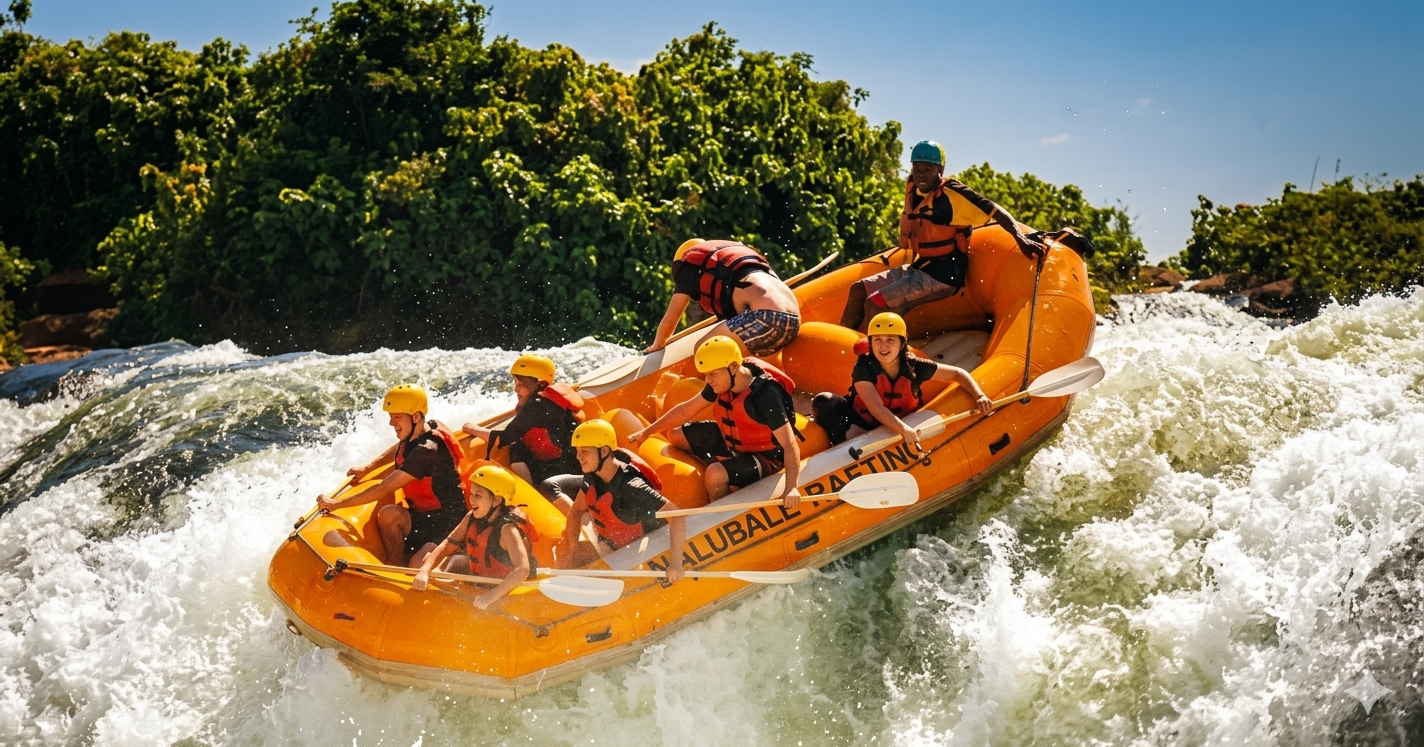
After leaving school, I craved adventure sport. I got into kayaking, which took me out to Africa for a couple of years. I was a trained raft guide and worked on the Nile, running world class rapids and doing kayak videography. That adventure lifestyle was where my heart was. I also did some climbing, but proper running never entered my head. It wasn't until I was in my late twenties, living in London working as a watchmaker, that I started thinking differently about my health and fitness. I'd had a back injury from kayaking years earlier that would flare up every six months or a year, and recovery was getting worse. I was getting older and my body wasn't bouncing back like it used to.
Tom - the Watchmaker
I remember doing a little 5k around the park and just stepping off a pavement. My back would go. That was kind of just before moving to the island. So my health was actually not in a great place.
Tom
The Parish Walk: My First Real Test
When I moved to the Isle of Man, I wanted to just run out my back door and run up the fells. It seemed like an amazing opportunity for my back and my health. I saw an osteopath which really helped, and then I heard about the Parish Walk - an 85 mile, 24 hour endurance event where you strictly walk around all the parishes of the island. It sounded perfect for low impact training.
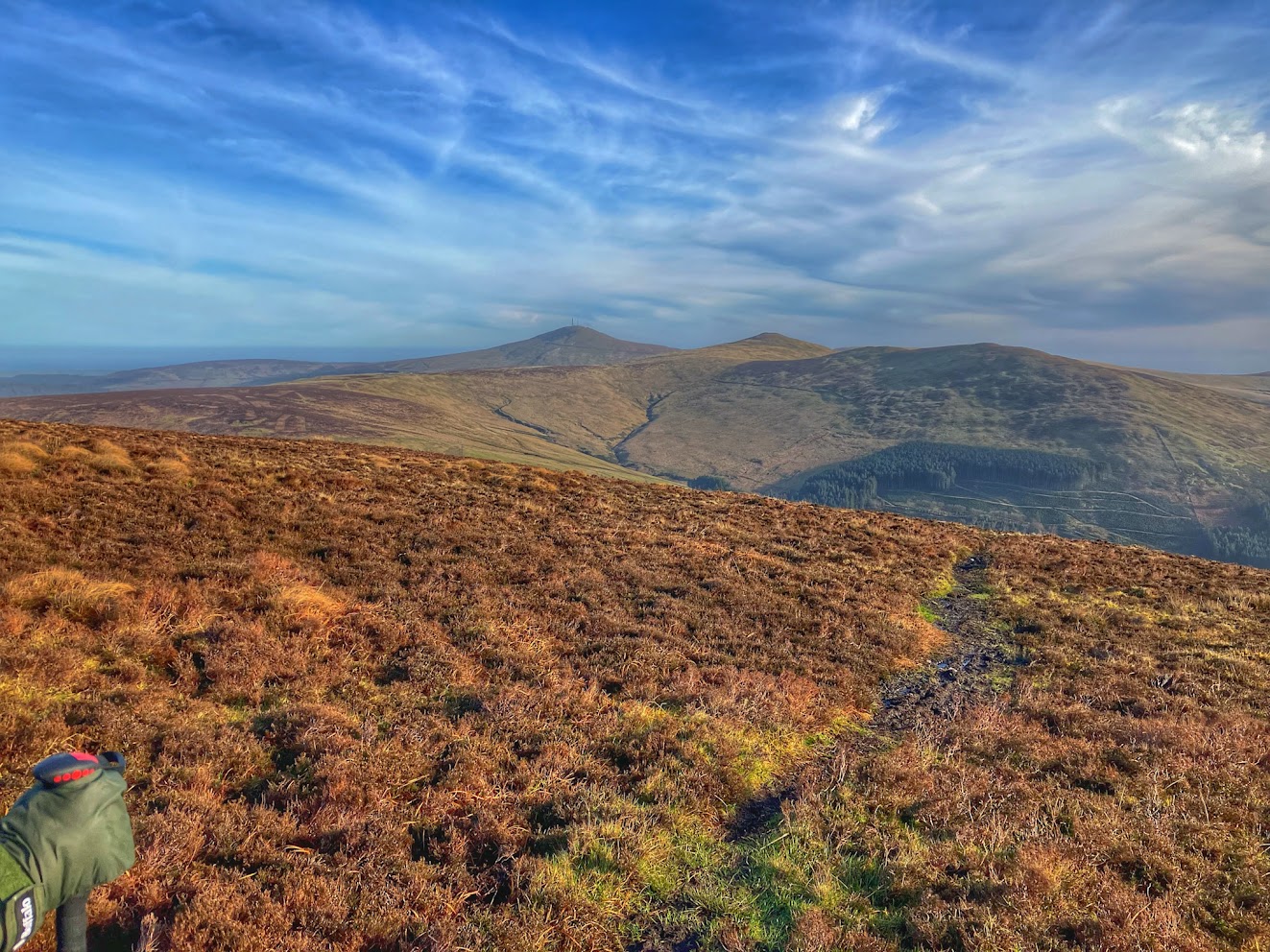
Colden - the hills around West Baldwin.
Me and a mate decided to do it together. We finished in 21 hours. But halfway through, around Ballaugh, I got a splitting pain in my right foot. Every single step hurt, and I still had 45 miles to go. I managed to walk through it, but it led to probably the worst post-race muscle stiffness I've ever experienced - worse even than what I've dealt with since. The thing about these endurance events is that a lot of people do them with zero training and just rely on mind over matter. You can do them, but if you train properly, you don't just do them - you dominate them.
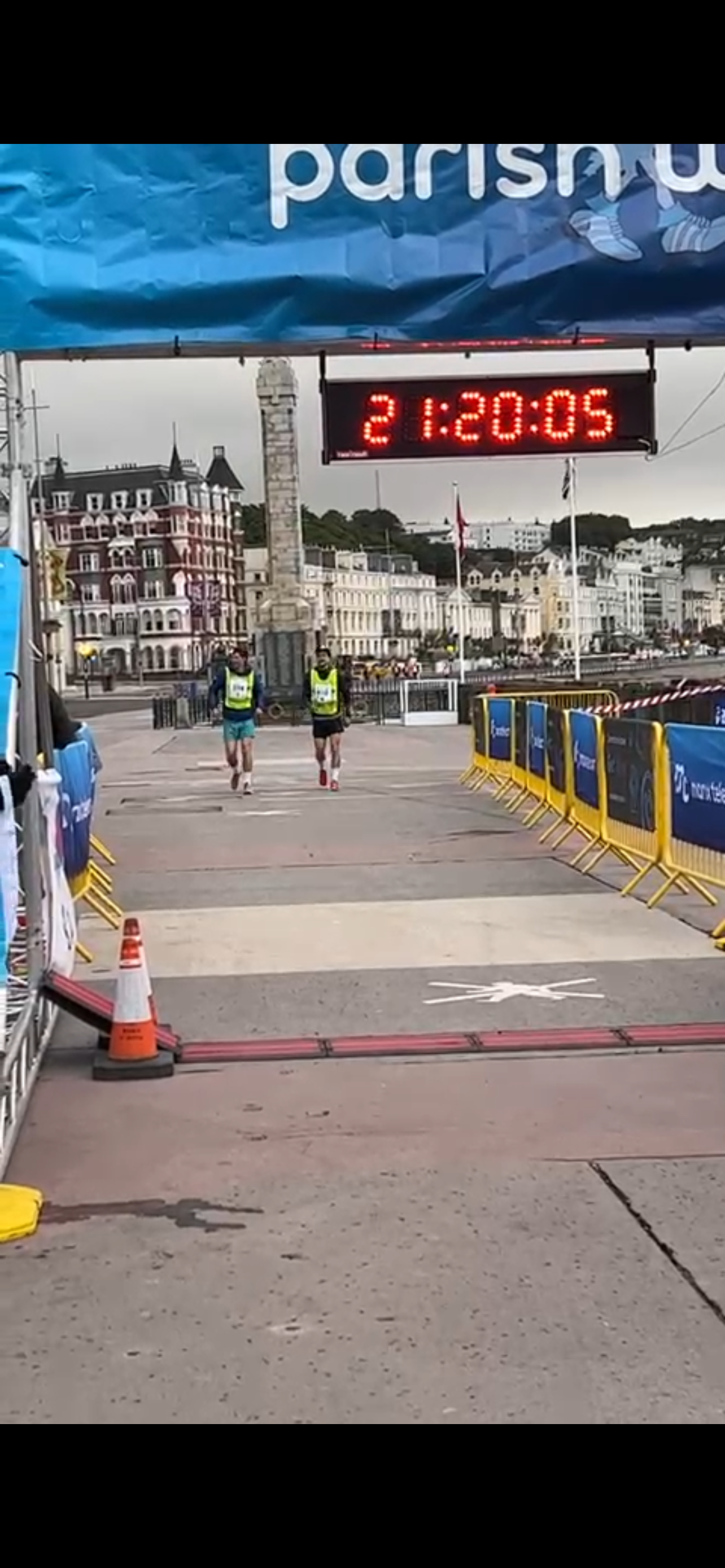
Tom and Aaron finishing the Parish walk
My girlfriend Daisy did the whole support for me, supporting us for the entire 21 hours. And I remember when we got home, she suddenly realized that me and Aaron could barely move and get to the bathroom. She was like, well, another eight hours of supporting us, cooking food. She was brilliant.
Tom
Ironman, Mountain Marathon, and Finding My Competitive Edge
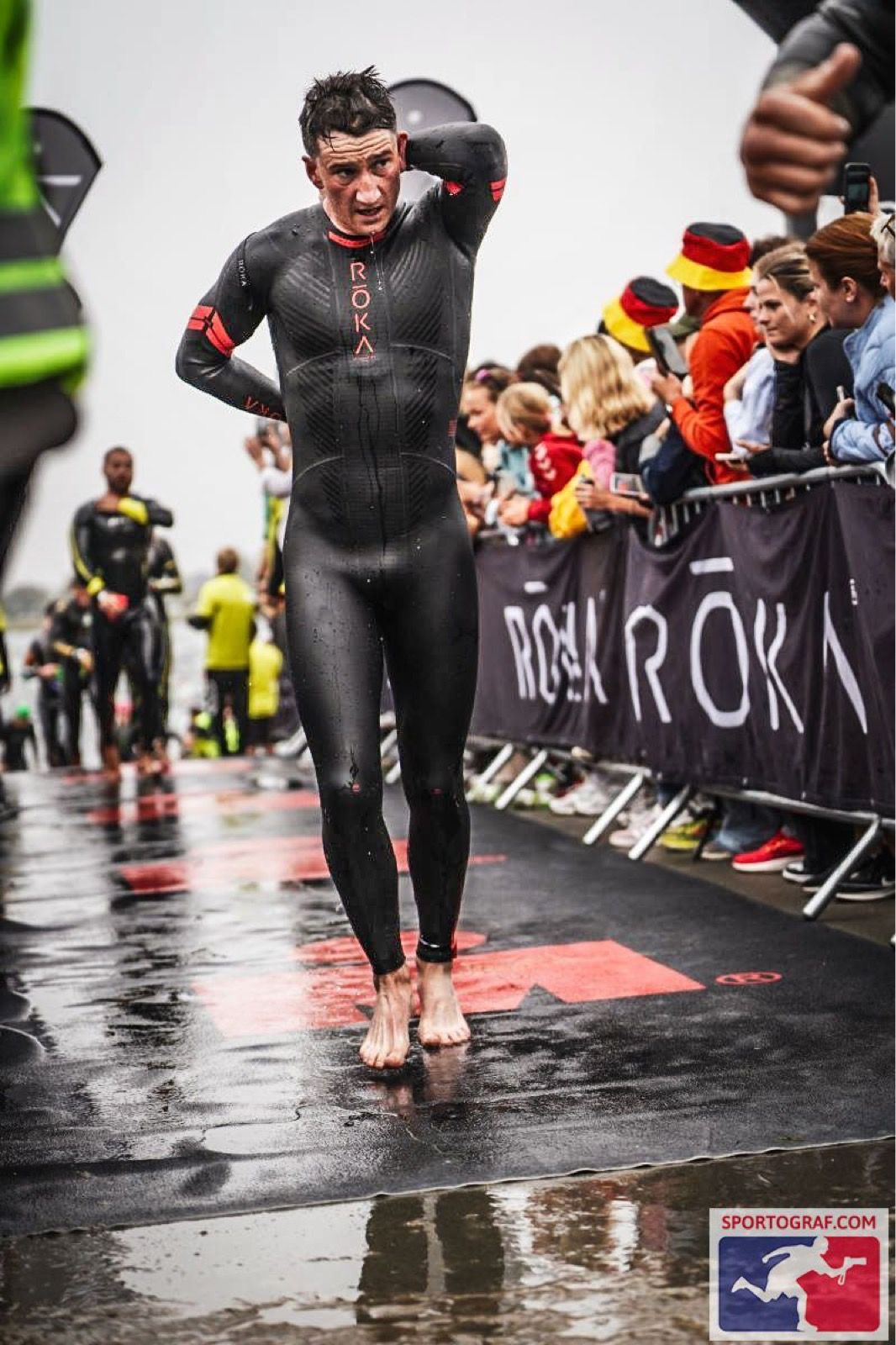
After the Parish Walk, I wanted to get more into running. A Dutch friend in Switzerland was doing an Ironman, so I signed up for Copenhagen in August 2023. I had practically no training for it - I didn't even start until the end of February. But I got a coach called Andy Roach on the island, and that was my first introduction to proper structured training. I signed up for as many events as I could over those six months to build fitness. One of them was my first Manx Mountain Marathon, which was my first ultra.
For the Ironman, I was swimming in a pool for the first time in years. I remember doing two lengths and being completely out of breath. But in six months, just by tweaking efficiency and practising, I made incredible progress. The Ironman itself went brilliantly - I hit my sub-12 hour goal and ran a 3 hour 42 minute marathon at the end of it, which became my PB at the time. But the Parish Walk was mentally tougher than the Ironman. Even to this day, I think the Parish is probably the most mentally challenging thing I've done.
After Copenhagen, I decided to fully focus on running. I got a coach called Ollie Lockley and worked with him for four or five months. I wanted to get a sub-3 hour marathon. But going into winter after the Ironman training block, I felt a bit burnt out. I trained everything outside - no gym, no treadmill, no turbo trainer - and running in the dark with a head torch in a Manx winter can be draining. I lost consistency and basically stopped racing through 2024.
Then in October 2023, I had a lightbulb moment. I needed structure. I committed to running 5 kilometres every single morning. I'd never been a morning person, but I knew I'd just put it off if I left it until evening. For about three months straight, I didn't skip a single day. That was the first time I truly saw the power of consistency. By early 2024, I had a solid base fitness again. I started doing longer hillier runs on weekends, and I decided to sign up for the Manx Mountain Marathon.
I'd done it two years prior in 6 hours 40, and I'd taken a wrong turning which added about 20 minutes. So I knew sub-6 hours would be cool, and secretly I was like, five and a half would be amazing. I'd really love to get sub-5 and a half and be somewhere in the top five.
Tom
What happened at that race was a surprise even to me. I felt really good the whole way. I'd come from behind and found myself in first place with about 10k to go. That was the first time I'd ever been leading a race. The mindset was totally different - I wasn't chasing anyone anymore. I was the one being chased, running scared because I had everything to lose. I finished in 5 hours and 6 minutes or so. I'd smashed my secret goal by nearly half an hour.
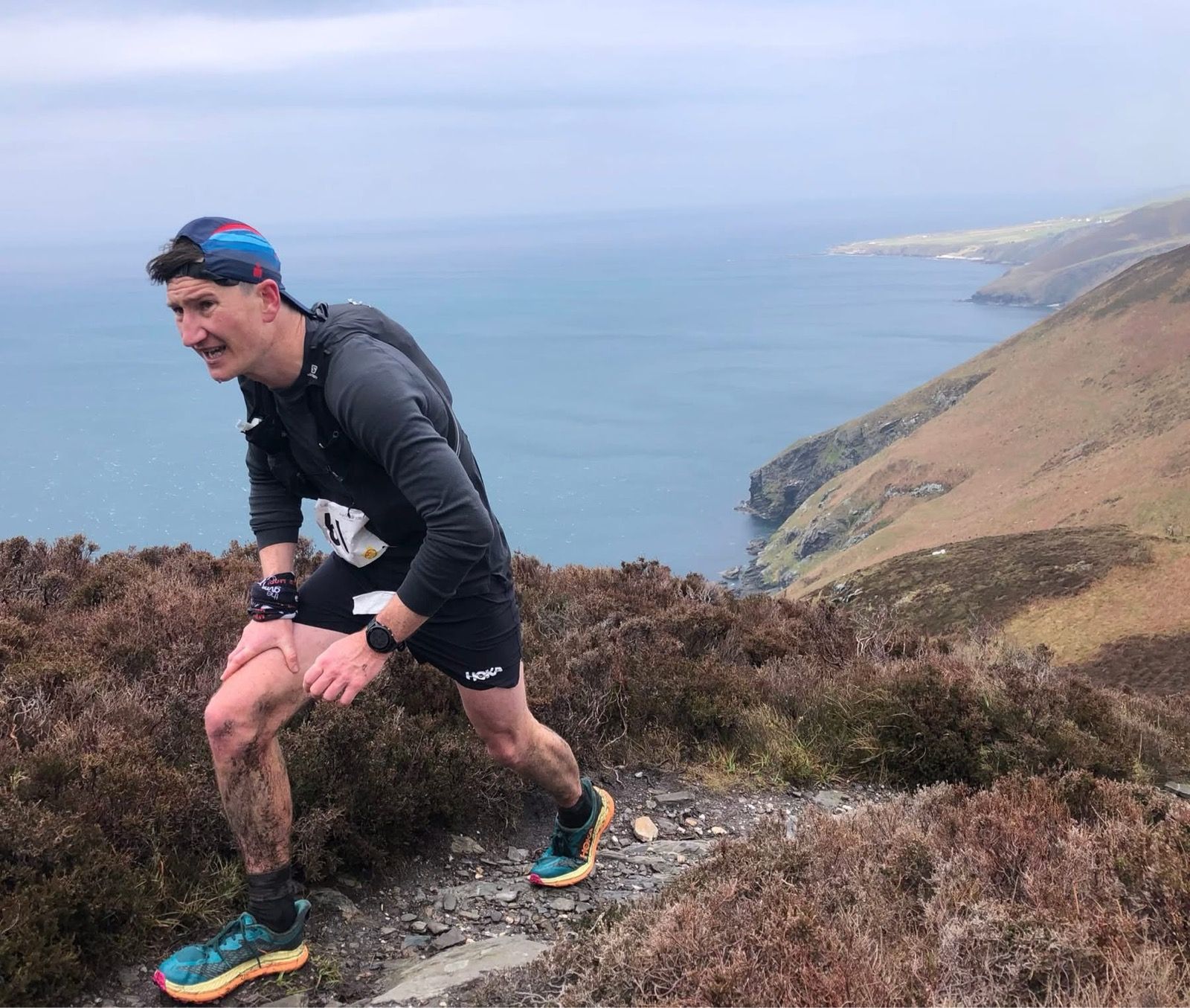
Tom climbing up Liett ny bennie - 26 miles into the 2025 Manx Mountain Marathon.
Preparing for UTS 100 Mile: The Deep End Again
After that result, I wanted to push myself further. I'd always wanted to do the big UTMB races, and I realised I needed to complete a 100k first to even be eligible for a 100 miler. I did Winter on the Downs as my qualifying race, but honestly it was rough. I'd had to go to Dubai for work, came back sick, couldn't taper properly, and the weather was horrendous. Plus I was wearing new fell shoes and my feet were absolutely destroyed - I was walking sections because of foot pain, not tiredness. I got top 10 but it wasn't pretty. Still, it ticked the box.
When I got in touch with Orran and Nikki at ESTR coaching, I was very honest about being out of my depth. I'd never done a mountain ultra before. I didn't know how to prepare for 100 miles with all that elevation gain. UTS is widely regarded as the toughest 100 miler in the UTMB series - I was going straight in at the deep end again, just like I'd done with the Ironman. But this time I wanted guidance. I wanted to go in feeling confident, not making silly mistakes that could be avoided with good coaching.
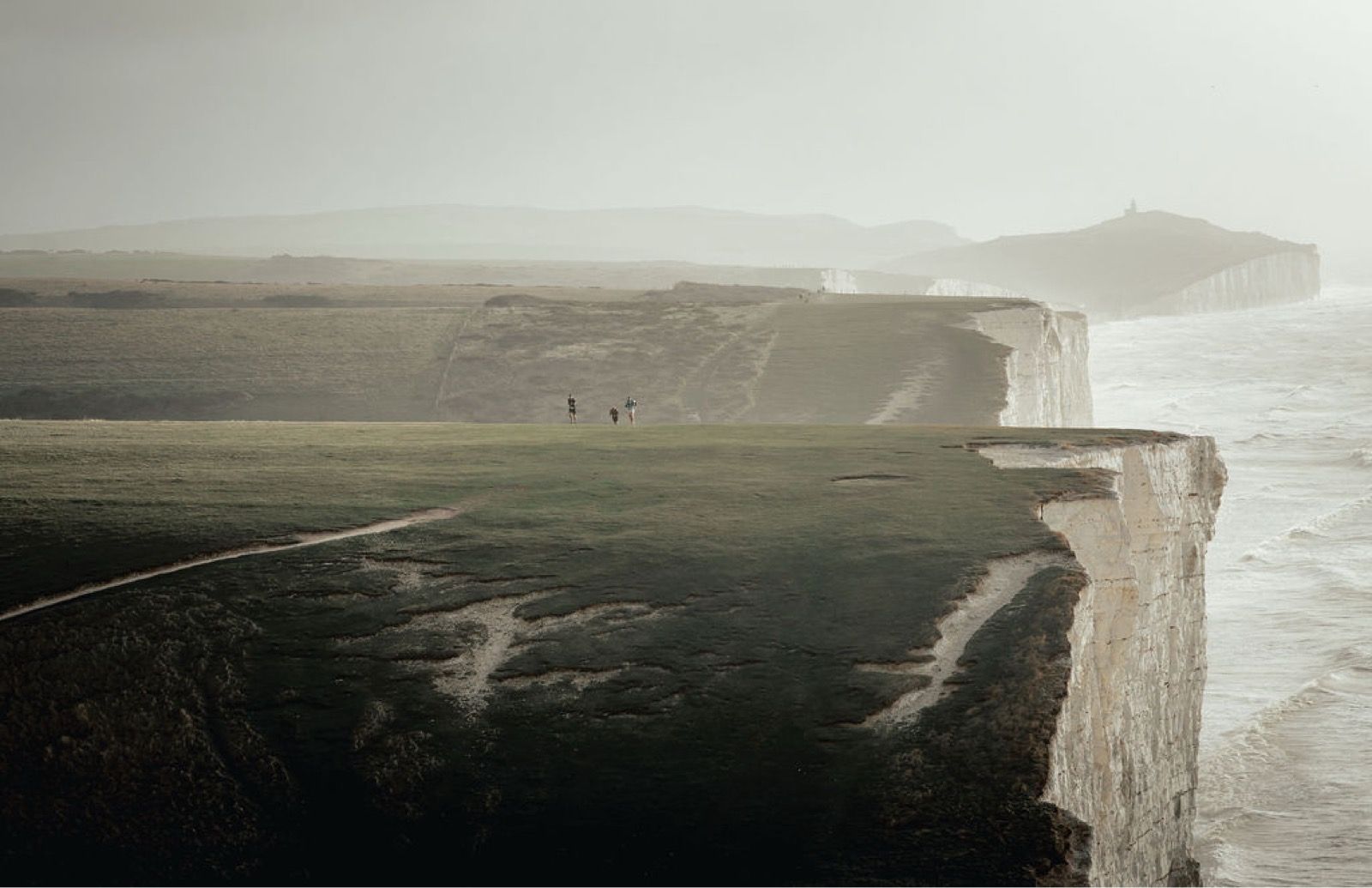
Aerial photo taken during the Winter on the downs race.
I signed up with them in November. I'd come second to Sam Jones in Ellen Vannin, another indication that I was getting faster. But over Christmas I took time off and when I came back in January, everything had seized up. It took a month of easy stuff just to get back to where I was. But then things started clicking. The coaching sessions got harder, I was getting faster, and I could feel it all coming together.
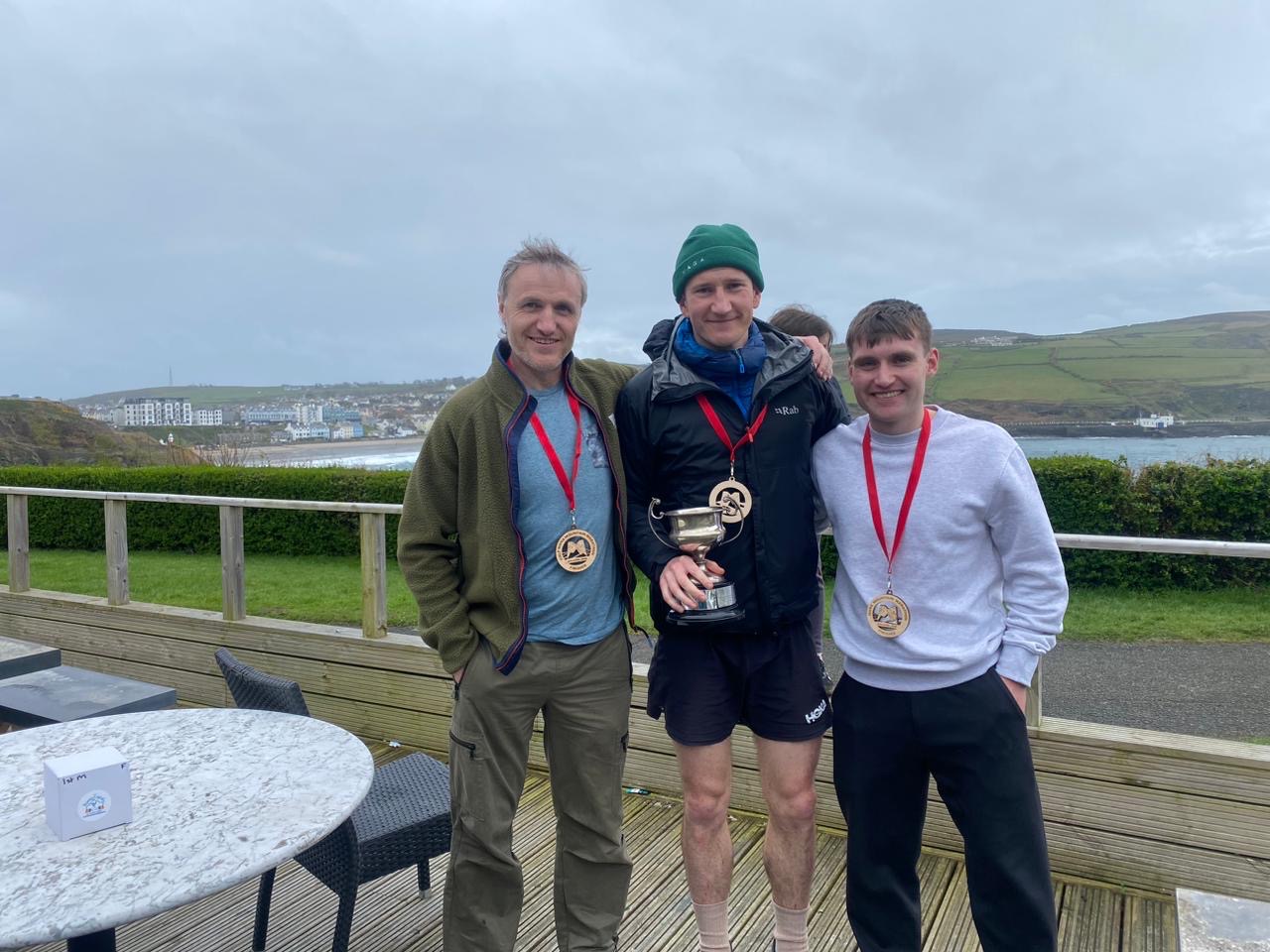
Tom wins the MMM 2026 in the lead up to the UTS 100 mile
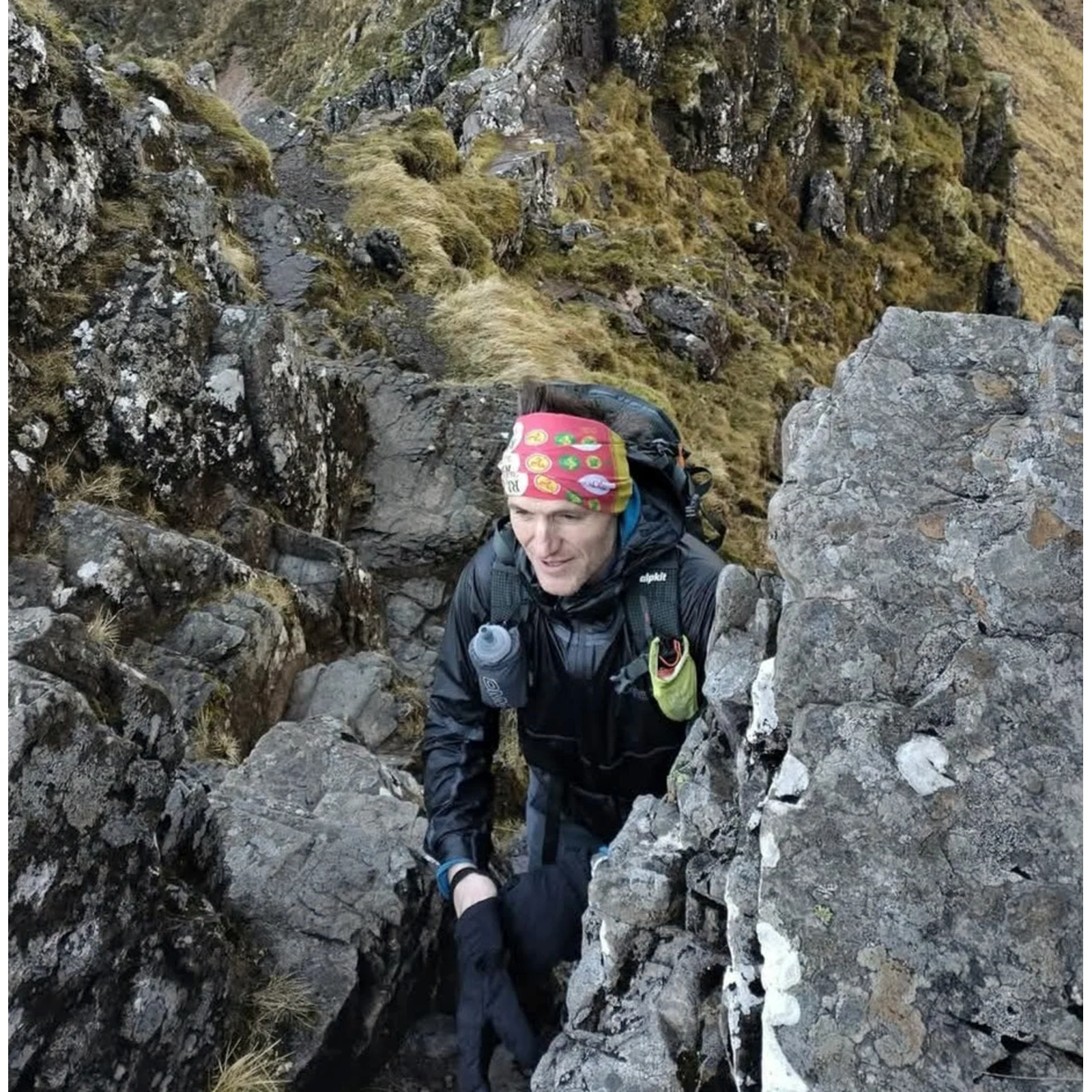
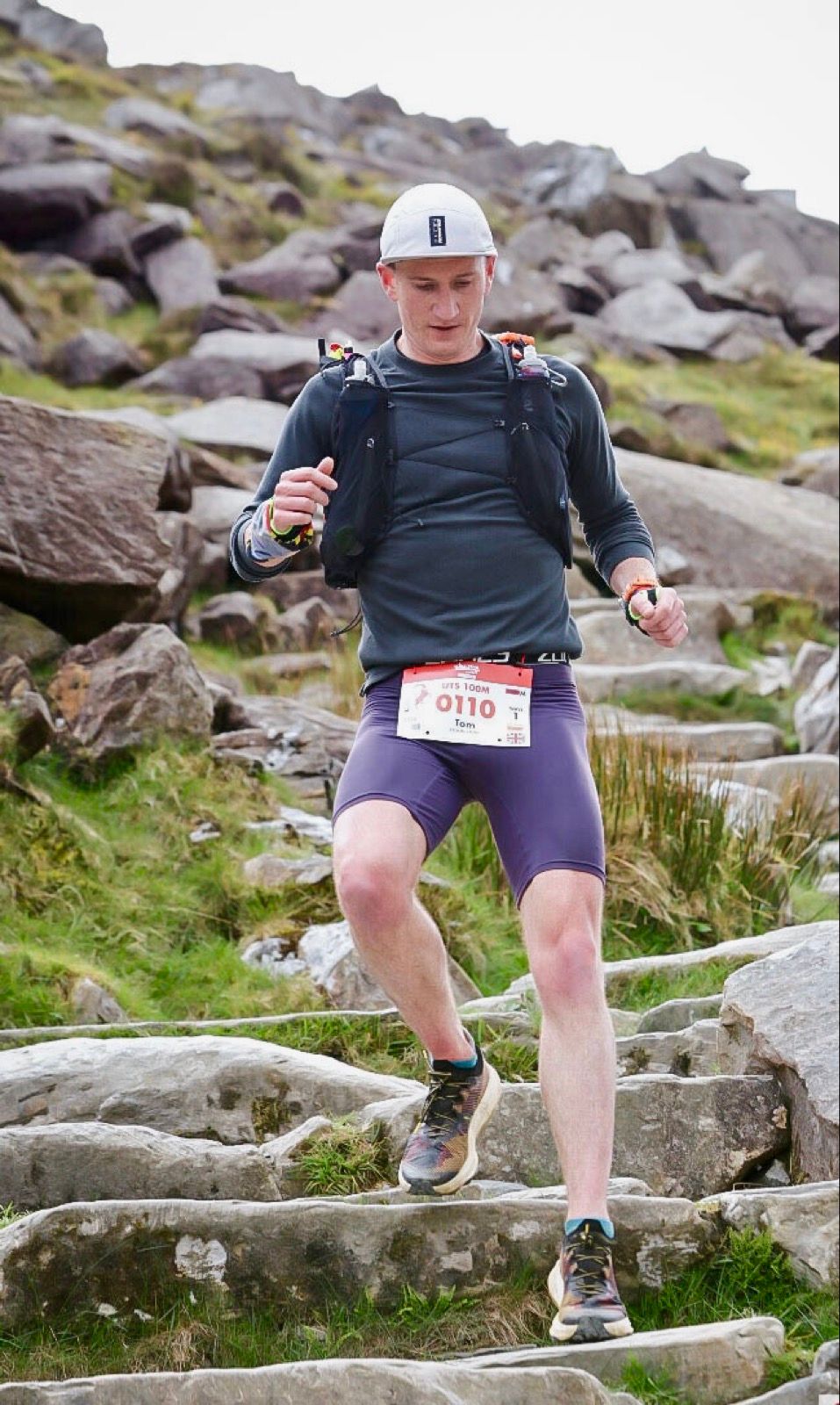
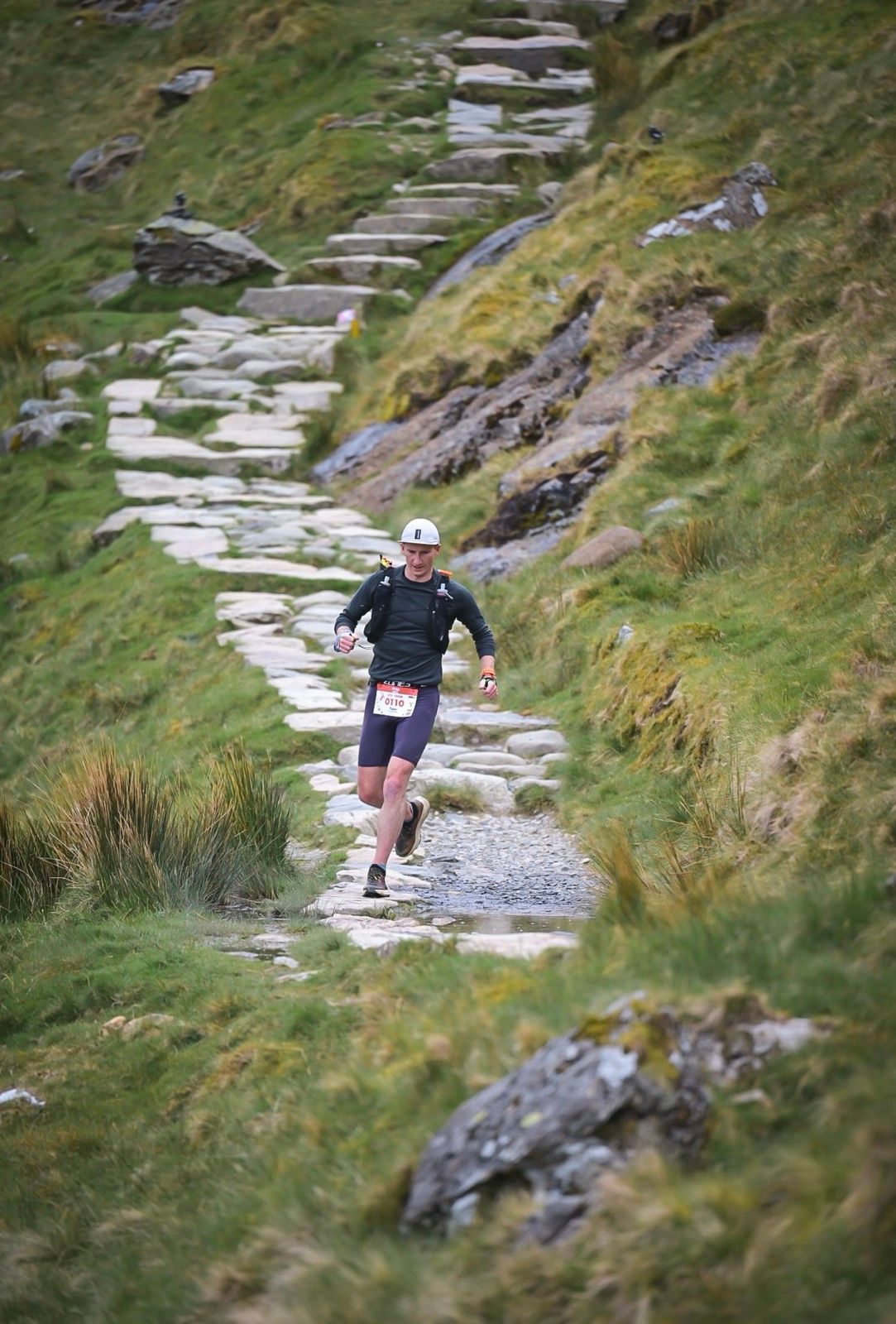
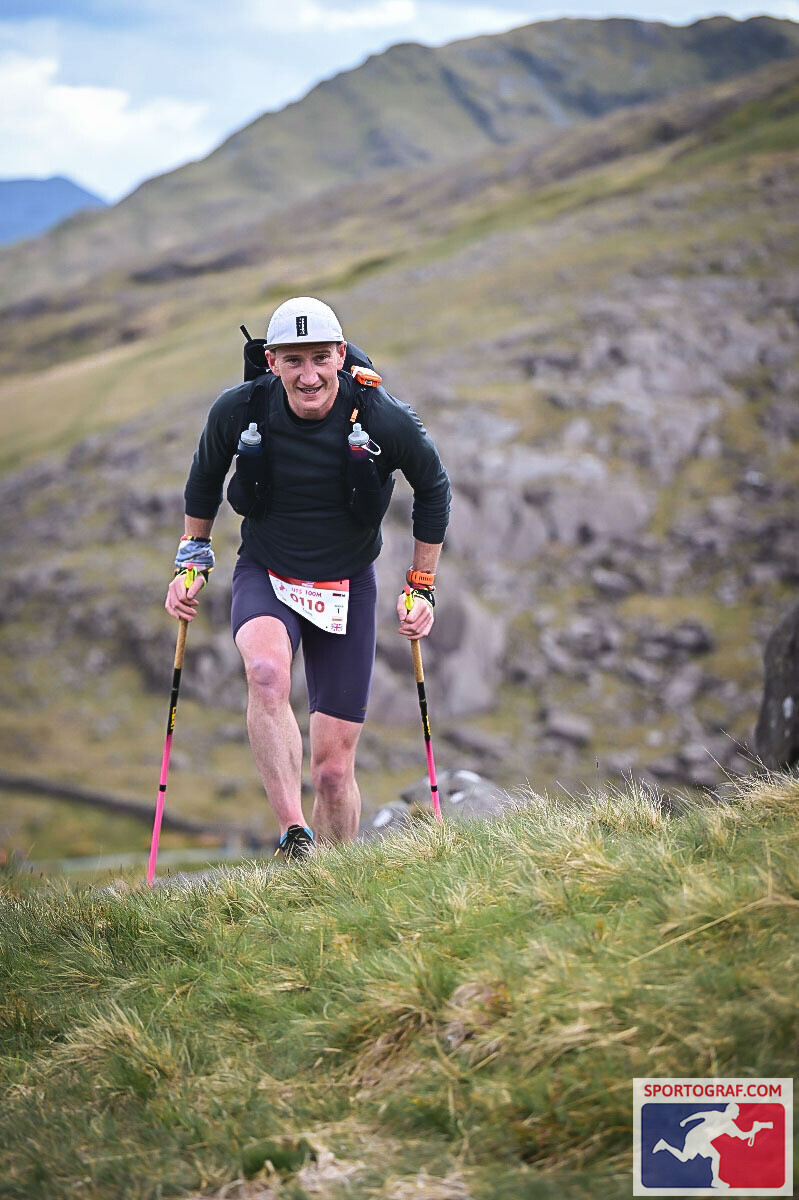
The real prep was the recce. Orran hammered on how important it was, and I'm so glad he did. I went out to Snowdonia for four days with my friend Brad. The route is so long and the terrain is so different from the Isle of Man. The hills on the island are done in 10 to 20 minutes. Some descents at UTS go on for 45 minutes. The terrain is jagged rock. You can't switch your brain off. Every step requires attention. It was a shock to the system, but by day three I'd settled into it. I also practiced my fueling strategy and my poles - I hadn't done much pole work before, but they make a massive difference when you use them properly.

Some of the mountains you encounter on the UTS 100 mile route.
Race Day: 28 Hours of Discovery
I went into UTS with three goals: finish it, sub-32 hours, and secretly, sub-30 hours and top 10. I'd researched fueling obsessively. I knew that consuming Maurten carbs and commercial gels worked for me, but I'd also been experimenting with making my own sugar syrup gels. Table sugar is basically a one-to-one ratio of fructose and glucose, which is exactly what your body can efficiently absorb. So I mixed sugar with water and a bit of flavouring into soft flasks. For the cost of about a pound per kilo of sugar, I could make energy that costs nothing compared to branded gels. I tested it on long training runs and ended up preferring it.
Making your own gels
Race day started at 2pm. I felt relaxed about it because I knew the first part should be easy. I started near the back after a toilet break, which meant I was passing a lot of people early on. At the first aid station they told me there were only about 10 people ahead - I was in the top 10 already, which made me realise I needed to ease off. I dropped back to around 16th position and settled in.
1 / 5
Going up that long climb around 20k in, around where I was doing the recce with the new route, was a low point. I'd only done maybe 1500 to 2000 metres of elevation and already felt like I'd done a big day. But I ran with James Chapman and another guy called Simon from Ecuador, and having people to run with made the time go so quick. As it got dark, we went down into technical terrain and I completely whacked my head on a tree. I went flying - feet in the air, back hit the floor. I thought I might have ended my race right there. But after five minutes at the aid station I realised I was okay.
The nighttime section with Simon was brilliant. We teamed up and it made the dark hours go easily. We had a beautiful sunrise coming up after Croessor, running as the sun came up through these quiet mountain sections. Just hearing your own breathing, being in the zone. That was special. I'd held off caffeine gels until about 2 or 3am, so when the sun came up I felt great again.
I felt so good for about 15k after that. I just started going. I didn't actually see Simon again. I just basically felt so good and kept moving.
Tom
But then came Bedliggert support station around 7 or 8am, and that was my lowest moment in the race. I'd had that sun reset for the last few hours, but now I was flagging again. And there was a big climb ahead. For about the first half of that climb I felt pretty slow. But on the last third I got some more fuel in me and started feeling good again. I started passing people on that section.
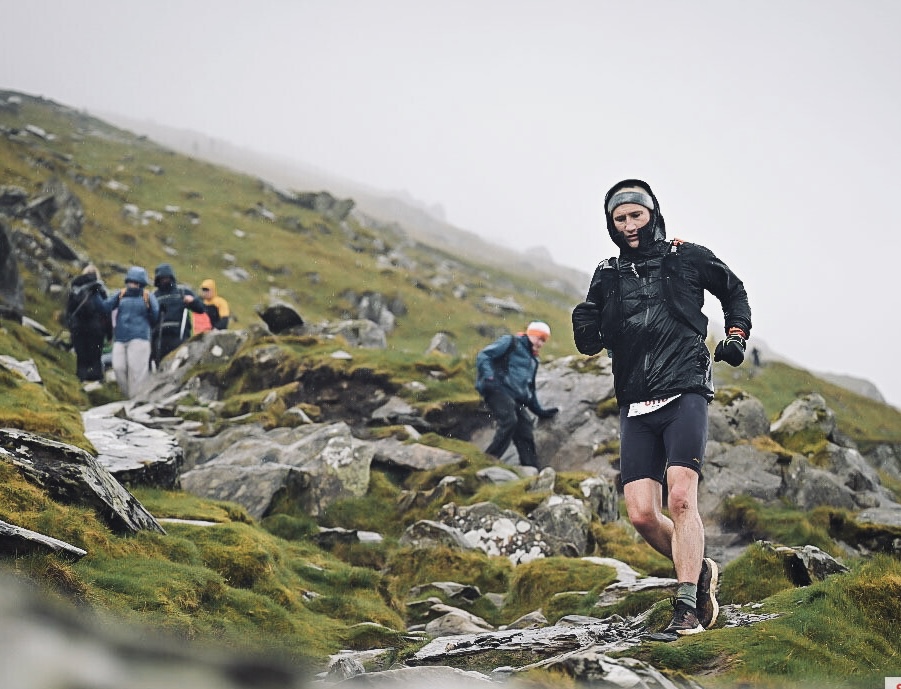
Then came Nantau Ridge. The route conditions had been pretty good until then - no rain, cool, not too bad. But as I came down Nantau Ridge, the rocks were getting slippery. At the checkpoint, Daisy mentioned a French guy had gotten vertigo. Another guy came in looking shell-shocked, saying he'd been tripping on the slippery rock and didn't like heights. But that somehow gave me a boost. Coming up to Snowdon halfway up, it started getting really cold and nasty. And then I merged with the 50k route and it was absolute carnage. Hundreds of 50k runners, people with poles in your face, chaos.
But here's where things got interesting. I made a navigation error. I'd updated my GPX file four days before the race, but UTMB had sent an email the day before saying they'd updated the route again. I didn't see that email. At a junction where all the 50ks were going down one way, my GPX was telling me to go another. I followed my file, thinking I'd done the recce on that route. I lost about 10 minutes before I realised both routes led down to the same checkpoint anyway. It was frustrating, but not disastrous.
The final aid station was at Mynydd Mawr. I was wet, it was muddy, the single track was churned up. I changed socks, got fresh gear, headed out again. That final climb after that - I can't remember the name - got really misty. By this point my knee was starting to flare up, painful on the uphills and downhills but okay on the flats. But I was pushing hard.
At that penultimate aid station, Daisy told me there was a guy one mile behind me and another guy ten minutes ahead. That's when it clicked. I could get sub-30 hours. I could get top 10. My race hat went on. I was locked in. I decided to play defensively - if I run every section that's a choice between walking and running, the guy behind me has to do the same to catch me. That secures my position.
Going up that final climb to Moel Eilio, I felt so strong. Coming down was rough - knees were really flaring up, it was muddy and cold. But I hit the fire track and I started to believe. I worked out I could get sub-28 hours. Then on that final section, I suddenly heard someone coming up hard behind me. This guy comes past and I'm like, what race are you running? He says mine - he's 11th. My heart sinks. But he suddenly needs to go to the toilet and drops off the side of the trail.
I can't ease off because he's going to be done in a few seconds and he could just catch me again. So I push hard up this little kicker back up and look down - he's pushing it hard too. I think, oh wow. I need to just give it all. I hit the top and sprint down this really steep section. My body is going to hate me for doing a 20 minute 5k at the end of a 100 miler, but I'm just running scared because I've got it to lose.
Tom
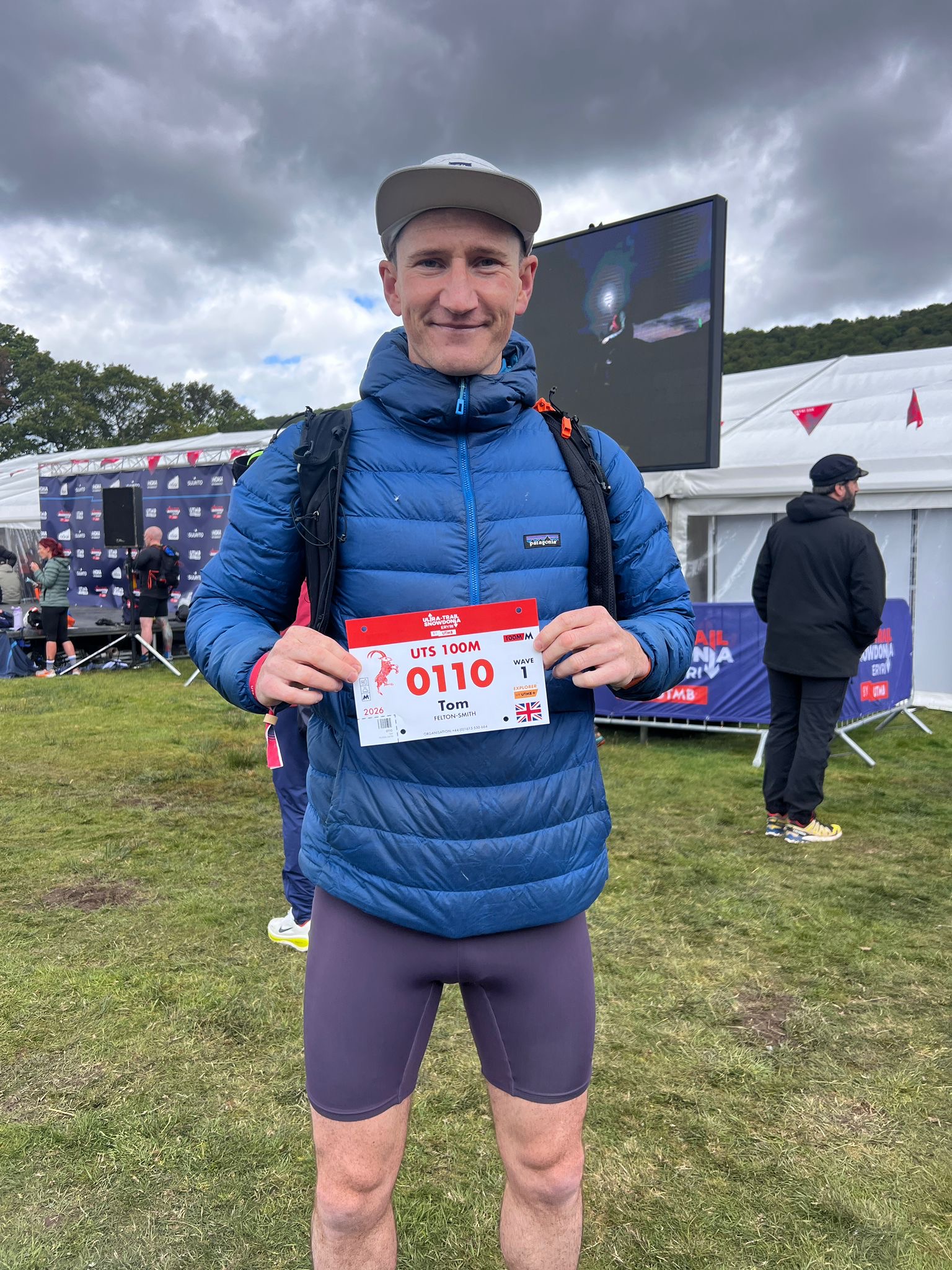
I crossed that finish line and Daisy and Dec told me I got eighth place. Eighth! I thought I was 10th. I was absolutely over the moon. What I didn't realise is that in that final climb or descent, I'd passed not only 9th but also 8th. Those two had been running together and hadn't seen me until I was past. One of them had told the other to try to catch me, which is why he'd come flying past. But with the toilet break and me still having gas in the tank, he couldn't hold me. My time was 28 hours and 12 minutes.
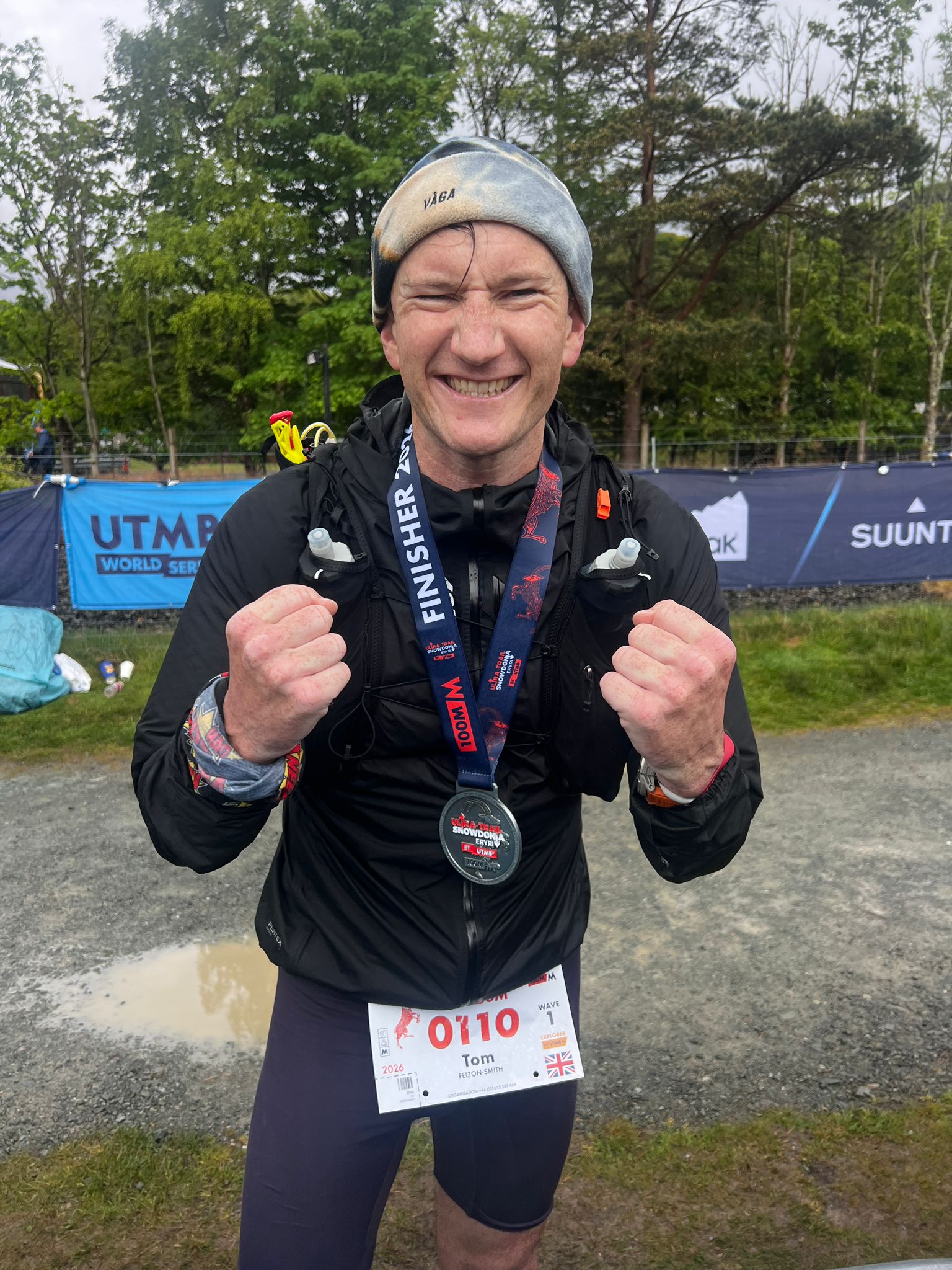
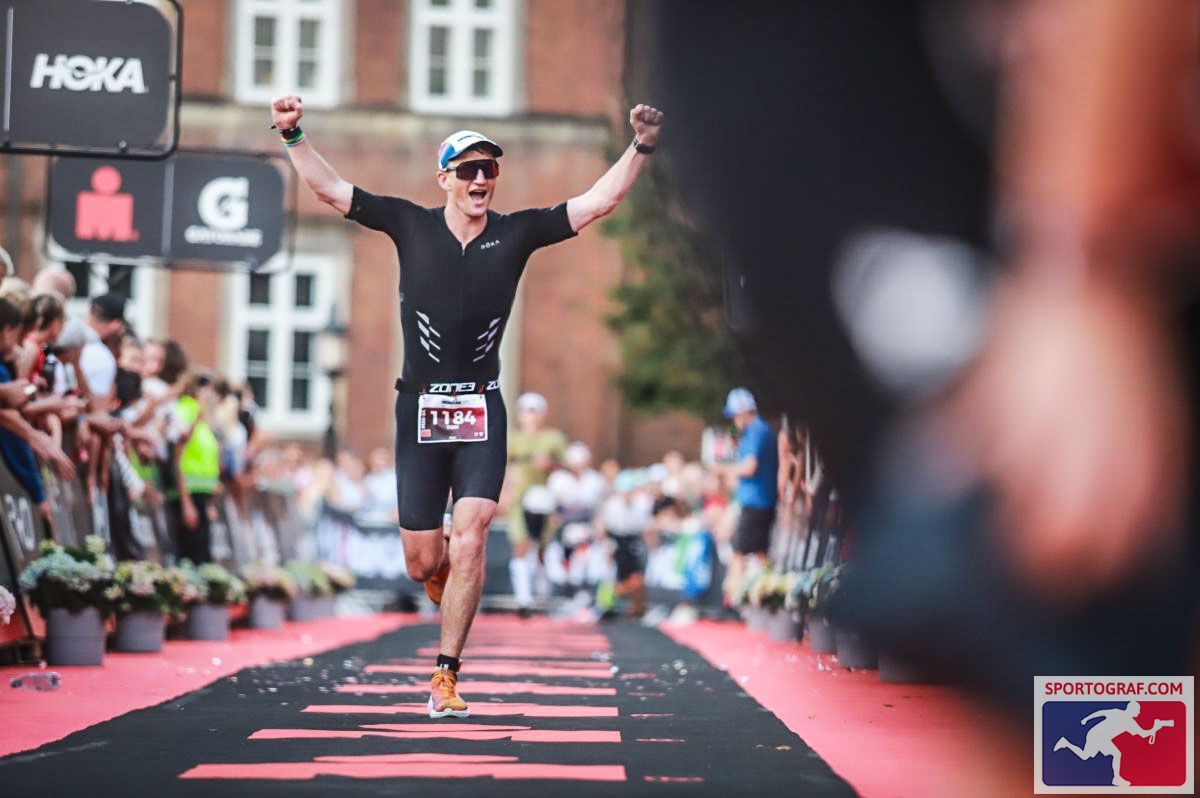
Ecstatic finisher's moment, showing the emotion after completing the 100 mile UTS